Often, yes. A one-page website isn’t a lesser website. It’s a focused one. Everything a visitor needs sits on a single scrolling page, in the order they need it, with one clear thing to do at the end.
The catch is that it only works when the page is built properly, and when the business genuinely fits it.
Who a one-page site suits
- A single, clear offer. One service, or a small set of closely related ones.
- A local or clearly defined audience. A café, a clinic, a consultant, a builder working across one county.
- An early-stage business. You need to look credible and be easy to contact now. The detail can come later.
- One main action. Call, enquire, book or visit.
Who it doesn’t suit
- Several distinct services or audiences, each needing its own explanation.
- A shop, online payments or memberships.
- Lots of content: a portfolio of dozens of projects, a regularly updated blog, detailed technical information.
- Search goals across many topics. One page can be found for what it’s about, but it can’t target dozens of different searches.
If you recognised your business in the second list, a larger website, possibly a bespoke one, will serve you better.
What the sections need to do
A good one-page site works like a good conversation: it answers the next question before the visitor has to ask it. A typical order:
- Opening banner: who you are, what you do, where, and the main action.
- Services: what you offer, in plain language.
- Proof: reviews, accreditations or examples of work, and only real ones.
- How it works: what happens after someone gets in touch.
- About: the people behind it, briefly.
- Gallery: your work, your place, your team.
- FAQs: the questions you’re asked every week.
- Contact: a form, phone, email, and where to find you.
Not every business needs all eight. Some need a booking button where others need a quote form. The point is that every section earns its place.
Does a one-page site work for search?
It can be found for what it’s about: your business name, your main service and your area. It needs the same foundations as any site (proper titles, descriptions, headings, fast loading and a mobile-friendly layout) and, for local businesses, a Google Business Profile that matches it exactly. What it can’t do is compete for lots of different topics. That’s what extra pages and articles are for.
Growing beyond one page
A one-page site doesn’t have to be a dead end. Built on WordPress, it can gain a page for events, a menu, a service area or a portfolio when the business needs one, and later grow into a larger site without starting again.
What a one-page site looks like with XPY Launch
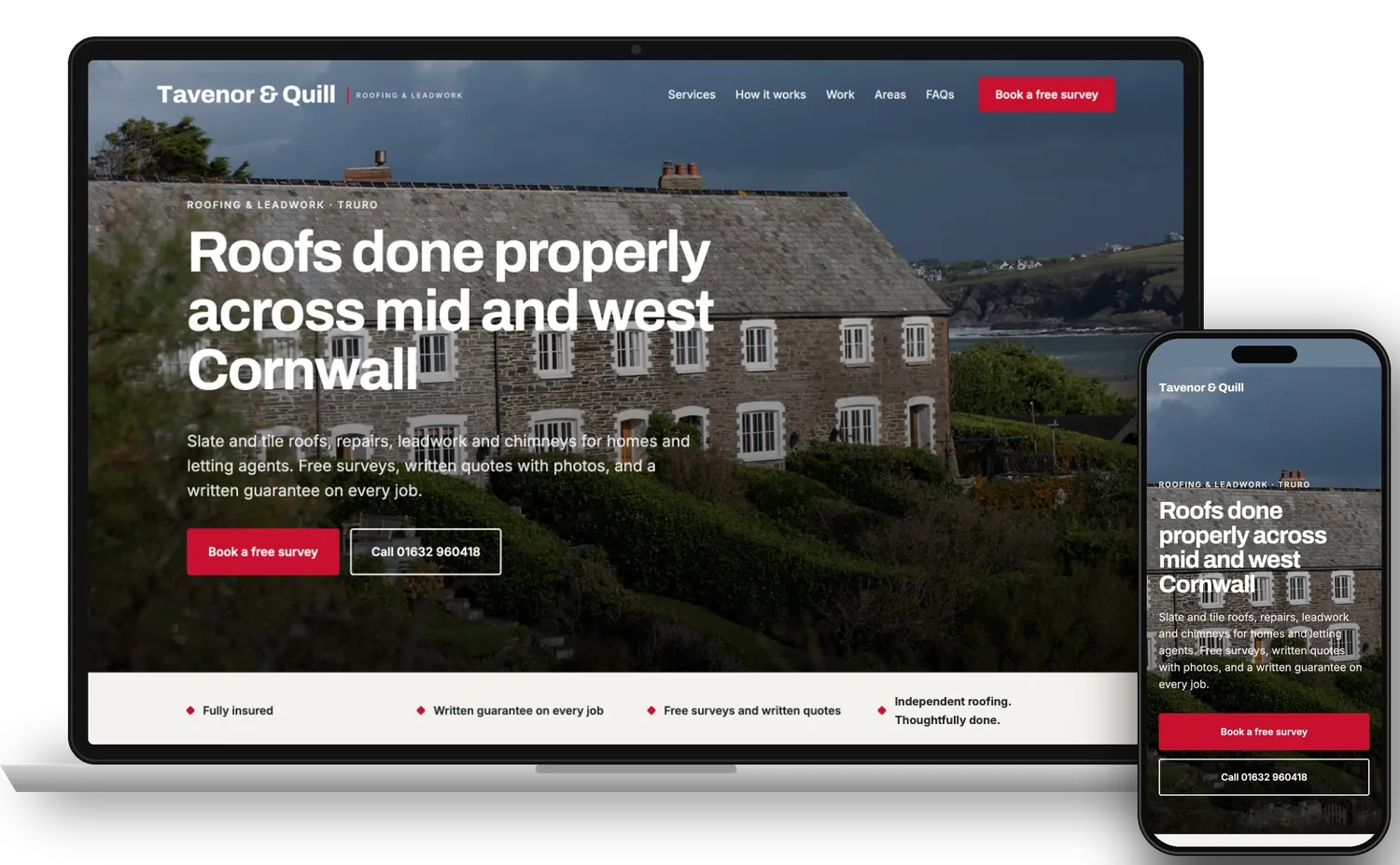
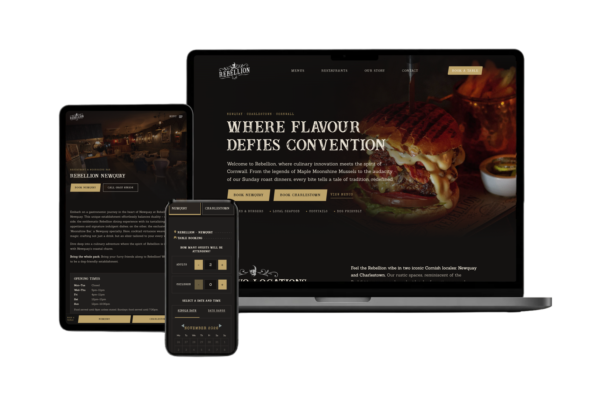
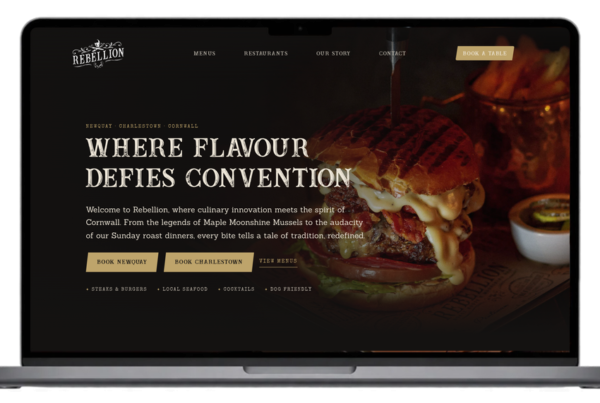
XPY Launch is a professionally built one-page website: up to eight sections, styled to your logo, colours and fonts, checked personally, with one revision round and your own login. Up to two extra pages can be added for £250 each. It costs £1,500 fixed. The demo above was built for a fictional business to show what a Launch site looks like.
See the one-page demo on the Launch page
Comparing quotes? Read What should a £1,500 business website include? Setting up from scratch? Start with domain, email and hosting. Need more than one page? Start a bespoke project.